July 11th, 2013
Client: (The Original Farmers market)
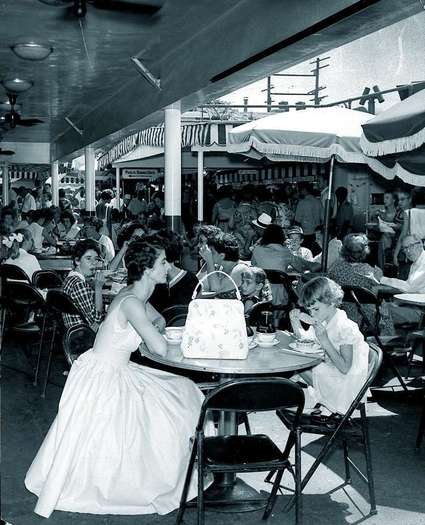
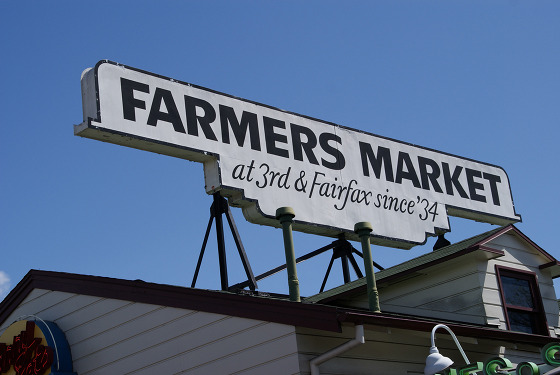
The Farmers Market at 3rd and Fairfax celebrates its 79th birthday on Tuesday. This photo was taken circa 1959. (Handout)
Taste of Farmers Market: To celebrate its 79th birthday, the Third and Fairfax Farmers Market is holding a wandering feast, offering tastings from the market’s restaurants and grocers, on July 16 from 5 to 9 p.m. The extensive menu includes chicken pot pies, stuffed mushrooms, flatbread, gumbo, orange chicken, pastrami sandwiches, barbecue, falafel, crepes, toffee, doughnuts and more. The tickets are available here for $35 or $40 at the door. 6333 W. 3rd St., Los Angeles, (323) 933-9211.
View original posting by following the link:
http://www.latimes.com/features/food/dailydish/la-dd-los-angeles-food-events-adam-perry-lang-20130709%2c0%2c3624544.story
July 11th, 2013
Client: (Home for Good)
The number of people living on the streets in L.A. County keeps growing despite the improving economy. Services need to be better coordinated and more innovative.
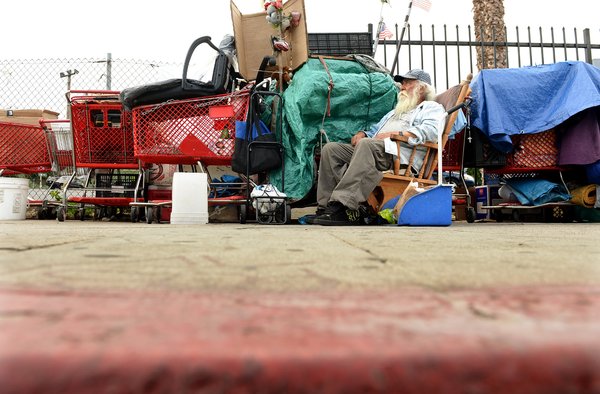
- The number of homeless people in L.A. County increased from 50,214 in 2011 to 58,423 in 2013, according to the Los Angeles Homeless Services Authority. Above: A homeless man sits along Spring Street in Downtown Los Angeles with his belongings. (Los Angeles Times / September 5, 2012)
The U.S. economy may be recovering, but it’s not evident on the streets of Los Angeles County. According to the Los Angeles Homeless Services Authority, the number of homeless people increased from 50,214 in 2011 to 58,423 in 2013. That includes the count for the city of Los Angeles, where the number increased from 25,539 to 29,682.
Even as jobs begin to return, the desperate plight of so many people demands creative and focused attention. It’s a challenge worthy of a new mayor and of renewed commitment from the county Board of Supervisors.
Over the last few years, millions of dollars have flowed into programs administered by the city, the county and their private partners, most notably the Home for Good housing initiative, run by the United Way of Greater Los Angeles and the L.A. Area Chamber of Commerce. Officials say the homeless count would be even higher if those programs had not been in place. But the persistence of homelessness suggests that services need to be intensified, better coordinated and more innovative.
VIDEO: A safe place for homeless
One place to start: Service providers should target the right people for the right resources. Permanent supportive housing, with its many onsite health and social services, must go only to the chronically homeless who are also suffering at least one substantial mental or physical disability. And county authorities need to reassess why half the people who are placed in subsidized transitional housing programs — with a two-year maximum stay — return to the streets.
The county also needs more affordable housing. Even when people in permanent supportive housing or other interim housing are stable enough to move into affordable housing, there is often none available.
And there is ample room for new ideas. The city and county, for instance, should be looking for ways to turn unoccupied buildings into housing for the homeless. The county Department of Health Services is in early discussions with the owners of the Cecil Hotel downtown about leasing the 600-room building and transforming it into permanent supportive housing for the homeless. That’s a creative way to expand access to housing.
Reducing homelessness benefits everyone, from the homeless men, women and children living on the sidewalks to the owner of the building that overlooks them and their belongings. It should involve the business community as well as government officials. It is both an economic problem and a moral crisis, and it deserves the full efforts of local leadership.
View the original posting by following the link: http://www.latimes.com/news/opinion/editorials/la-ed-homeless-los-angeles-county-20130705%2c0%2c621879.story
July 11th, 2013
Client: (The Original Farmers Market)
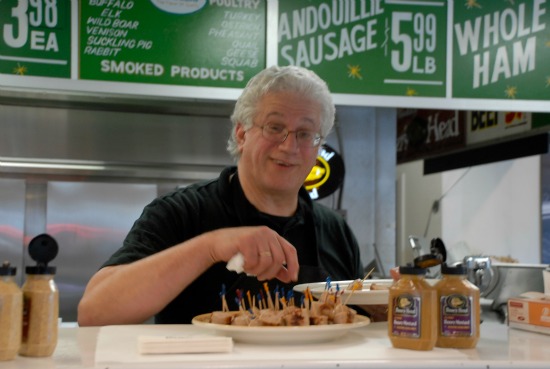
- Jim Cascone Huntington Wagyu Top Sirloin
The Original Farmers Market at 3rd & Fairfax is already a varied dining experience, with everything from Korean BBQ and Brazilian sausage to brisket, tofu and gumbo. For dessert, there’s tiny chocolate mousse, warm donut holes, root beer floats and lots, lots more. But at the 5th annual Taste of the Farmers Market food event on July 16, there will be even more samples than one person could possibly ever eat. Tickets are on sale now for the $35 event, and likely won’t last long.
A roving food fest that spans close to 50 stalls, one should approach the Taste of the Farmers Market with the precision of a military campaign. Fire away at starters, appetizers, a main course, dessert, and maybe even a couple of alcoholic drinks, all while you walk the stalls. Of course, there will be the occasional line to contend with, but since your magic wristband allows you to sample everything, you end up wandering around, your belt straining, vowing to try just one more place, or go back to the one you missed.
The best advice is to come hungry and arrive early — the event runs from 5 p.m. to 9 p.m. — and help celebrate the Farmers Market’s 79th birthday. You might try showing up first at newbie stall Zia Valentina, where you can get one of their Sicilian ice cream / Slurpee concoctions (also known as a Granita) as a starter.
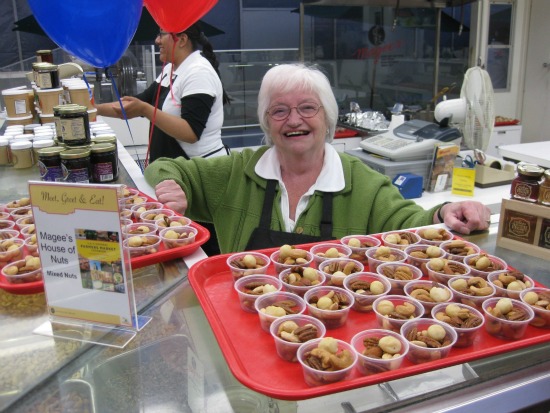
- Original Farmers Market Magee’s House of Nuts!
If you’re a meat or fish lover, you can indulge in some generous portions at two of the market’s oldest tenants: Tusquellas Fish & Oyster Bar is sure to provide mouthfuls of wild jumbo shrimp with cocktail sauce and some French fries, while family-owned Marconda’s Meats might offer a juicy pinch (or two, if you’re polite) of their Wagyu Top Sirloin.
The Gumbo Ya Ya at the Gumbo Pot is a winner for almost everyone — regular or rookie — but not everything at Taste of the Farmers Market is carnivore heaven. The Veggie Grill has kale Caesar salad, and The Village might cook up a batch of spinach and cheese boreka. There are even doggie treats for four-legged visitors at The Three Dog Bakery.
Alternatively, you could spend the night basking in the bad-but-good stuff: Nutella crêpes at the French Crêpe Co, buttermilk donut holes at Bob’s Coffee and Donuts and mini-scoops of ice cream at Bennett’s next door. Expect a chocolate fondue bar from Dylan’s Candy Bar, a cherry dollop from Pinkberry, and some good old English toffee at the Magic Nut & Candy Co. to round out the event. Plus Loteria Grill, Du-Par’s, Moishe’s — the list is nearly endless.
Looking for any final tips before you make plans to be at Taste of the Farmers Market on July 16th? Slow and steady wins the race. Stop for regular refreshment (you’ll find juices and sodas available, in addition to the two bars), and if you stay until the end, try making one last round to make sure there’s nothing you missed.
Follow the link to view the original posting of this article: http://blogs.laweekly.com/squidink/2013/07/top_5_and_more_places_at_taste.php
July 5th, 2013
Client: (Home For Good)
A 100-day test of the system, which aims to quickly place chronically homeless people in housing with medical and social services, is seen as a success.
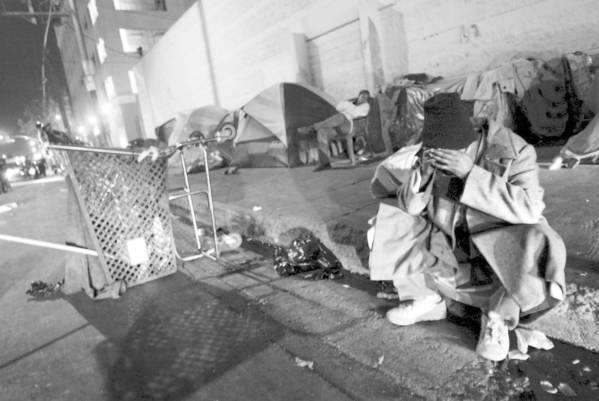
Skid row in downtown Los Angeles. (Genaro Molina, Los Angeles Times / September 24, 2003)
Officials released the results of a pilot program Tuesday described as the Match.com of homeless services, designed to get the sickest, most endangered people off the streets and sidewalks of skid row for good.
The 100-day project brought 20 government and nonprofit agencies together to build a computerized data-gathering and management system to quickly place hard-core sidewalk dwellers in housing with medical, rehab and social services.
Under the new system, case managers seek out long-term homeless people under bridges and down back alleys and score them on their mental and physical disabilities, how often they visit emergency rooms or jails, and their general medical condition. Housing agencies work off a single waiting list, giving priority to those already identified as most in need of help.
In little more than three months, the new system had “leased up” 35 people in as few as nine days, organizers said.
Authorities hope to put the tracking and placement tool in place countywide.
Homeless people historically have had a tough time wending their way through the patchwork of private and government housing aid out there, each with its own qualifications and restrictions. Waiting for an opening can take as long as four years, organizers said.
Most of the people placed by the project had been homeless for years or decades, or were veterans newly home from Iraq or Afghanistan. One had been on the streets for 44 years.
Raymond Fuentes, leasing supervisor for Skid Row Housing Trust, said many of them gave up long ago looking for housing, either because they were too sick or too discouraged by the maze of requirements to push through the bureaucracy. All five waiting lists for his agency’s two dozen buildings are closed, with up to 200 people signed up to fill the occasional opening, Fuentes said.
“Some of the younger, healthier people are going to muscle their way in,” Fuentes said.
The pilot program builds off recent research showing that putting homeless people in housing and offering them medical and other treatments with no strings attached is more cost-effective than forcing them to get well or kick a drug or alcohol addiction before receiving services.
Los Angeles County’s most entrenched street dwellers make up a quarter of its roughly 51,000 homeless people but consume 75% of its homeless financial resources.
The approach was pioneered by Project 50, a county experiment to house 50 of the county’s most intractable skid row dwellers. A county study found that the program saved $238,700 over two years by reducing the homeless churn through the county’s jails, hospitals and shelters.
The project was developed under the auspices of Home for Good, an initiative of United Way of Greater Los Angeles and the Los Angeles Area Chamber of Commerce with the goal of getting all veterans and chronically homeless people in the county into housing by 2016.
“We are changing the system,” said David Hamlin of the Los Angeles Business Leaders Task Force on Homelessness.
Follow the link to view the original article posting on the LATimes.com: http://www.latimes.com/news/local/la-me-chronic-homeless-20130626%2c0%2c2725002.story
July 5th, 2013
Client: (The Original Farmers Market)

For the first time in its 79 year history, the Original Farmers Market at 3rd & Fairfax in Los Angeles will have a new address: Delta Airlines Terminal 5 at Los Angeles International Airport.
The A.F. Gilmore Company, which owns and operates the Farmers Market, has teamed up with Delaware North Companies, one of the world’s leading airport food service and retail companies, to create Farmers Market To Go, a miniature Farmers Market inside LAX. Construction on the innovative new dining and shopping area is expected to begin in Fall, 2013 and open in early 2014.
Farmers Market To Go will offer travelers a broad selection of meals, coffee, snacks, spices, nuts, candy and wine, all from original Market restaurants, shops and stalls. Among the dining opportunities will be an extensive take-out menu from Monsieur Marcel’s Bistro and a wide range of items from the popular Monsieur Marcel Gourmet Market, including fine wines, cheeses and much more. ¡Loteria! Grill, Farmers Market’s award-winning restaurant offering authentic Mexican cuisine, will also help anchor Farmers Market To Go with fresh, flavorful dishes available for dining in or to go. ¡Loteria! will also have bar service at its newest location in LAX. T & Y Bakery, one of the Market’s fine bakeries, will also join the Market To Go lineup with delicious pastries and desserts.
Authentic Market fare will cycle in and out of display cases and mini-kiosks in the LAX space regularly, providing products such as nuts and nut butters from Magee’s House of Nuts, coffee from rotating Market coffee purveyors, Bennett’s Ice Cream, spices from Dragunara Spice Bazaar, and even treats for travelling pups from Three Dog Bakery.
The dining area at Farmers Market To Go will reflect the open air patio dining for which the Original Farmers Market is known while interactive displays and screens will introduce visitors to Farmers Market and its merchants.
“We’re very excited about this new venture,” said Ilysha Buss, Farmers Market Marketing Director. “We’re particularly glad that Farmers Market To Go will send Angelenos away and welcome them back with a real taste of home. We also welcome the chance to introduce visitors to one of L.A.’s most cherished institutions with great Market food and fun set within a one-of-a-kind Farmers Market background.”
Two main displays will greet LAX visitors as they approach Farmers Market To Go. A large “Meet Me At 3rd & Fairfax” video screen will provide Farmers Market history, a “tour” of the Original Market and video interviews with featured Market merchants. A second, very large 3D screen will feature the Market’s famous icon, its tall white Clock Tower, at the entrance. Inside, interactive iPad screens affixed to display cases and kiosks will provide additional information about Market merchants and their shops and interesting facts about the Market. These smaller screens will also enable travelers in a hurry to make purchases with the swipe of a card.
“We’re striving to make Farmers Market To Go at LAX as close to the original as we can,” said Ms. Buss. “The Market is almost 80 years old yet it is still one of the tastiest, liveliest and most entertaining places in L.A. This new ‘kid’ in our family will be all that as well.”
The Original Farmers Market is owned and operated by the A. F. Gilmore Company, stewards of the famous property at 3rd & Fairfax in Los Angeles since the 1880s. Farmers Market was created in 1934. In addition to being a second home to generations of local residents, Farmers Market has been one of the top tourism destinations in Los Angeles for all of its 79 years (Frommer’s Travel Guide rates the Market # 1). Virtually all of the Market’s shops and stores are family owned and operated and many shops have several generations at work on any given day. More information is available at www.farmersmarketla.com.
To view the orginal posting visit this link: http://www.travelmole.com/news_feature.php?news_id=2006986&c=setreg®ion=2
June 13th, 2013
(Client: Skid Row Housing Trust)

.
.
.
The Skid Row Housing Trust has spent decades revitalizing abandoned buildings and hotels in downtown Los Angeles’ most destitute neighborhood to serve as shelter for the city’s chronically homeless.
But for its latest housing project, the trust abandoned its usual technique for a seemingly elementary construction concept. A 102-unit, $20.5-million complex is being built by stacking pre-outfitted apartments atop one another in a Lego-like fashion, limiting construction costs and fast-forwarding the project timeline. It is believed to be the first multi-tenant residential building in the nation to be constructed this way.
Like all of the Skid Row Housing Trust’s 24 homes for the homeless, the sleek and distinctive Star Apartments are meticulously styled to look nothing like typical low-income housing.
The project, designed by award-winning architect Michael Maltzan, will include basketball courts, art centers, community gardens and hundreds of feet of green space. The stacking of apartment units began last week, and the bulk of the construction should be done by mid-January.
“What we’re trying to create is something that feels like a microcosm of the city itself,” said Maltzan, who has designed two other apartment complexes for the homeless in partnership with the trust.
Unlike dark, drafty and dreary low-income housing, where residents reside in monochromatic buildings, Maltzan’s project, he said, infuses color and community with a layout and amenities that force residents to interact. That sense of community, housing trust officials believe, is paramount to rehabilitating the chronically homeless.
Because the pre-fabricated construction method is typically used for single-family homes, planners had to work with officials to clarify regulations and standards for shipping in the pre-constructed apartments, which the architect characterized as a tedious and at times frustrating process.
“The hope is that we’ve created a replicable pathway for similar projects,” Maltzan said last week, as he watched a towering blue crane lift a pre-fabricated apartment unit onto a building platform. “When people look at this building, what they see is a vision of the future.”
The Star Apartments will house up to 100 formerly homeless, with an emphasis on residents who are repeat patients at area emergency rooms or who have never received needed treatment for chronic medical conditions, said Mike Alvidrez, executive director of the Skid Row Housing Trust.
Residents will pay 30% of their monthly job or government assistance income as rent but are not required to seek on-site medical treatment, psychiatric counseling, drug or alcohol treatment or therapy as a condition of residency.
“The thought is, how do we help people make the choice that is best for them,” said Alvidrez, who stressed the trust’s Housing First model — a philosophy that has caught fire nationwide. Alvidrez said the first step to helping someone recover from a chronic drug or alcohol problem is to give them a home and sense of community.
“We’re not going to build our way out of homelessness,” Alvidrez said. While the housing trust’s buildings are now home to more than 1,500 formerly homeless people, some estimates say as many as 51,000 people remain homeless in L.A. County.
The goal of the apartments is to fully rehabilitate residents through on-site social services, community space and professional development. While many eventually leave the housing trust’s buildings and move into other homes, if they keep paying rent they’re free to stay as long as they’d like. Lawrence Horn, 62, said he spent years on the streets of Los Angeles, afraid that his adult daughter might run into a destitute, shabby and drugged-out version of him while she was out on the town with her friends.
But a confident and polished Horn, in a crisp black shirt and suit, stood behind a lectern in front of about 50 people in the Last Bookstore on Tuesday and captivated them with a frank, 20-minute narrative of his life before and after moving into permanent housing offered by the trust.
Two years ago Horn moved off the streets and into the Carver Hotel, a circular structure designed by Maltzan next to the 10 Freeway. For the last year, he has been learning to become a spokesman for the trust through its resident ambassador program.
“I felt inferior, I felt less than,” Horn said of his time living on the street. But now, he said, “my story is no longer a doom-and-gloom story.”
To view the original article on LA Times.com follow the link. http://www.latimes.com/news/local/la-me-skid-row-housing-20121216%2c0%2c1039440.story
June 13th, 2013
(Client: The Original Farmers Market)
One night, dozens of bites: It’s Taste of Farmers Market.
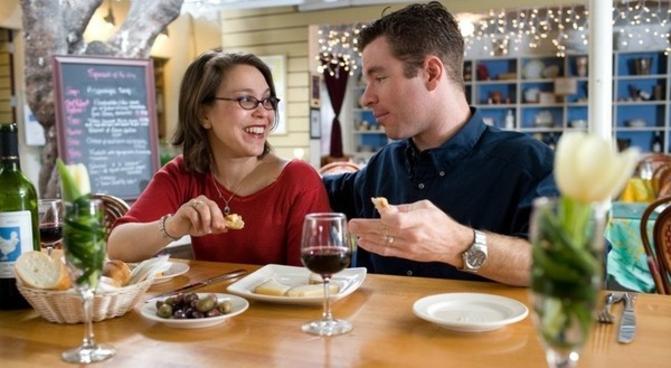
Is there a spot you haven't yet tried at LA's main hangout, the Original Farmers Market? Tuesday, July 16 is your night.
here’s a lot of food lore surrounding exotic fruits and particular restaurants and chefs, but the funniest bit of foodie belief, in our edible-loving eyes, are the must-dos of brunch.
Don’t eat the bread first, common wisdom goes, because you’ll fill up. Go back for more shrimp and crab, if that’s your thing. And always pick the strawberries with the greenest caps.
We want someone to develop a system like this, for us, for the Taste of Farmers Market. Oh, we won’t be selfish with our system. We’ll share, gladly. Because we see that this yummy annual event is just ahead — Tuesday, July 16 — and that tickets are on sale at the Market — yep, yep — and we need preparation and planning.
Why? Because every eatery in the landmark LA public market has a little tidbit on offer during the Market’s annual birthday party. This translates to 50+ restaurants and grocers. Thus, a system is required. Do we start with the fruity, salad-type stuff first, then make our way over to Huntington Meats for something slider-like? Or should we go with seafood, then crepes, then whatever Loteria is cooking up? (Fingers crossed for mole-drenched chilaquiles, but whatever it is, it will be piquant, plate-based perfection.)
So, you see our quandary. If only someone could make a “Family Circus”-style map. Remember when Billy would run all over the neighborhood, and dotted lines would follow? We need dotted lines to make sureto maximize the many savory and sweet choices of this sunny-evening soiree.
An ahead-of-time ticket is $35, and it’s $40 at the door.
And, on a side note: 75th anniversaries must be magical. Not only did Taste of Farmers Market start up from the Market’s 75th back in 2009, but its not-so-far-off neighbor Lawry’s The Prime Rib is marking its 75th this month with a bevy of specials.
But the Third & Fairfax favorite will be 80 next year, which gives it loads of time to draw up that dotted line map we so desire. Start with The Gumbo Pot, then walk to The Banana Leaf, then visit Monsieur Marcel’s? Or the other way around? Choices, you deeply delight in this instance.
You can find the original story posting at this link: http://www.nbclosangeles.com/entertainment/the-scene/Taste-of-Farmers-Market-Try-a-Bite-at-Every-Booth-211097061.html
June 7th, 2013
Client: (The Original Farmers Market)
Over 100 gleaming cars’ll go on display, for free, at the Original Farmers Market.

100+ VINTAGE CARS AND TRUCKS: The corner of Third & Fairfax, where the Original Farmers Market sits today, has long ties to autos (remember racing at Gilmore Stadium?) and gasoline (yep, there’s even a vintage gas station replica on the grounds). So an auto show celebrating the best of fenderdom feels right. See a bunch of cool machines take over the grounds — including the Studebaker Avanti, the star of the day — and see it for free on Saturday, June 1.
25TH ANNUAL AIDS Walk Long Beach: The beneficiaries for this fundraising walk extend to Manhattan Beach, so it is definitely one of the most important annual large-scale fundraisers in the South Bay. Want to walk? You can. Want to sponsor somebody? You can do that, too, or you can make a donation. If you want to join the event itself, it wends through downtown Long Beach on Sunday, June 2. Some satellite events, including a new Beach Challenge Obstacle Course, are part of the day.
MAKE MUSIC PASADENA: You could almost build a short poem out of the following sentences: Largest free music festival in California. Over 35,000 people in attendance. Some 150 concerts including performances by Tanlines and Yacht. Happening Saturday, June 1. (If we had some of those refrigerator poetry magnets, we’d lend them to you. Aaaand, go!)
PEDAL ON THE PIER: Count ‘em up: 100 stationary bikes and some 400 riders, give or take, will pedal 100 miles at Santa Monica Pier to raise money to provide “underprivileged children free, year-round camp retreats” with a nature angle. It’s a mega high energy day — yeah, we unleashed a “mega” there, because if you go you’ll see — and loads more people turn out to cheer on the riders, listen to music, watch dance, and get into the amped-up spirit. Date? Sunday, June 2
LAST REMAINING SEATS OPENS: Everyone loves our vintage movie palaces — yep, “love” is a pretty big word but poll five people and see if they don’t — but not everyone is able to see an actual movie in them, due to a variety of reasons, including the fact that many of our gorgeous downtowners simply don’t screen a lot of flicks. The LA Conservancy’s annual summertime “show an older movie in an older landmark” program brings the spotlight back and helps raise conservation funds, too. “Casablanca” and “My Fair Lady” are ahead. June 1-30, select dates.
Follow the link to the story on NBC : http://www.nbclosangeles.com/entertainment/the-scene/Weekend-Gilmore-Heritage-Auto-Show-209594891.html
February 20th, 2013
(Client: The Original Farmers Market)
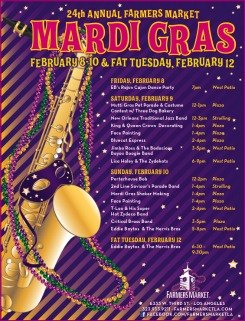
The market gets decked out in purple, green, and gold for LA’s most family-friendly community Mardi Gras celebration. There’s food – New Orleans beignets, jambalaya, and gumbo – as well as bead-tossing, craft booths, face painting, puppet shows, and Cajun and Dixieland music by Grammy-nominated Lisa Haley & The Zydekats, T-Lou & His Super Hot Zydeco Band, Eddie Baytos & The Nervis Bros, and Lula Afro Brazil.
Saturday features the annual ‘Mutti Gras’ doggie costume contest and parade at 12pm (advance registration for dogs is encouraged, either at Three Dog Bakery or by calling 323.935.7512). Sunday kicks off at noon, and the celebration continues on Fat Tuesday, with more New Orleans music on the patio from 6:30pm-9:30pm.
Click here to see the post as it appeared at la.mommypoppins.com
December 13th, 2012
(Client: Skid Row Housing Trust)
.
.
.

DOWNTOWN LOS ANGELES —
When it comes to real estate development, controlling cost is a universal goal.
It was that goal that led nonprofit developer Skid Row Housing Trust, which creates apartments for the chronically homeless, to its latest construction model — build the apartments offsite in a factory and have them trucked into Central City East.
The $20.5 million Star Apartments is rising atop a one-story structure at Sixth and Maple streets that SRHT acquired in 2008. But unlike other construction sites in Downtown, there are no hammer-wielding workers erecting wood frames. Instead, a crane is lowering prefabricated residences one-by-one onto a concrete superstructure that was poured over the existing edifice.
In a matter of weeks, 102 of the wood-framed modules will be affixed to the superstructure, saving potentially months worth of construction labor.
“We were looking for high quality housing that can be produced faster,” said Mike Alvidrez, executive director of SRHT.
The project marks the organization’s third collaboration with architect Michael Maltzan, who designed the building’s unique stacking structure.
The design and layout hinge on a recreation area on top of the existing structure that will have a basketball court and a running track. The apartments will sit above that community-focused pad, which was previously an elevated parking garage.
Skid Row Housing Trust owns and manages about 1,000 Downtown apartments. In recent years, operations have focused primarily on new construction. But most of the stock is in old low-income hotels.
The new project, which follows the model known as permanent supportive housing, places a premium on having on-site social services, from mental health treatment to case management for social benefits. In theory, formerly homeless individuals are more likely to utilize services if they’re under the same roof as their apartment.
Alvidrez said that recent Downtown developments have also shown that recreation spaces, from rooftop gardens to communal kitchens, have helped build a sense of community that further incentivizes residents to stay housed.
That’s why the Star will feature about 15,000 square feet of community space, including offices for on-site social services. The recreation facilities will be available to residents from SRHT’s older buildings.
The prefabricated apartments measure about 350 square feet and were manufactured in Idaho by Guerdon Enterprises. The units were trucked to Los Angeles and stored in a lot near SCI-Arc until the base superstructure was completed.
Each unit is delivered with toilets, appliances, cabinets and surface finishes installed. After all the residences have been put into place, they will be sheathed in a protective material, then stucco-finished like most modern multifamily projects, said Lad Dawson, CEO of Guerdon Enterprises.
Dawson said the standardization reduces costs.

“The big thing is that by constructing the buildings in a factory, we’ve been able to demonstrate the ability to produce a higher quality product on a more reliable budget and time schedule than is generally available with site-built construction,” said Dawson. “Secondly, we’re able to complete the construction much faster and there’s very little construction waste.”
The Star costs about $2 million less than SRHT’s recently completed 104-unit New Genesis Apartments on Main Street. The comparison indicates a modest savings on the Star, but Alvidrez said the project would have cost more using standard construction, which would have likely entailed demolishing the existing structure.
To visit the article’s source site follow the link to Los Angele Down Town News
http://www.ladowntownnews.com/news/downtown-s-prefabricated-architectural-star/article_23a48aaa-432c-11e2-8b06-0019bb2963f4.html?mode=story